
Here’s the pitch …
After two years of relaunches and pauses, suppliers and the trade are ramping up marketing again, convinced that the time is right to engage a (mostly) vaccinated and (definitely) pandemic-weary public. Part 1 of a two part report.


Illustration by Visual Generation/Shutterstock.com
Illustration by Visual Generation/Shutterstock.com
The fits and starts of the Covid-19 pandemic have given whiplash to travel marketers who have more than once launched advertising campaigns, only to have them run right into yet another Covid wave.
Now, with the passing of the pandemic’s second anniversary, a surge in travel advertising indicates that hotels, tour operators and cruise lines appear confident that, with travel restrictions falling worldwide and a world population that is often both vaccinated and very pandemic-fatigued, the time to market to a public bursting with pent-up demand to travel has arrived.
From Expedia’s 30 seconds of Super Bowl air time, Carnival Cruise Line’s massive “Funderstruck” campaign and Marriott’s presence at the return of live festivals like Coachella, travel marketing, like travel itself, appears to finally be on the rebound.
As Helen McCabe-Young, senior vice president of marketing for Virtuoso, put it, “Travel is roaring back, and no one wants to miss the opportunity ahead.”


Cruise
When cruising resumed last summer after more than a year, so did MSC Cruises’ marketing campaigns. In July, the line launched a targeted campaign focused on specific audiences and geographies on broadcast television, radio and digital TV channels like Hulu.
“We started strong,” said Ruben Rodriguez, president of MSC Cruises USA operations.
MSC’s TV ad depicts a “World of Discovery.” The line plans to invest “significantly more” into marketing this year than it had in 2019. (Courtesy of MSC)
MSC’s TV ad depicts a “World of Discovery.” The line plans to invest “significantly more” into marketing this year than it had in 2019. (Courtesy of MSC)
Then the delta variant hit, and MSC paused its targeted marketing program for several weeks. When it resumed advertising, “it supported a very strong November,” he said, only for the cruise line to hit pause again when the omicron spread.
Consistently, however, he said the line has maintained its broader national digital marketing efforts and scales it up or down depending on the traffic, response and consumer sentiment, which dropped during the delta and omicron surges.
“As sentiment improves, we scale up,” Rodriguez said.
MSC will invest “significantly more” into marketing this year than it did in 2019, he added, in part because the brand is adding capacity in the U.S., including New York as a year-round homeport.
At Norwegian Cruise Line, marketing is viewed as a constant, and the line said it never stopped completely. With the pandemic easing, it’s leaning even harder into its efforts.
“We pulled back right after the pandemic in 2020, but we didn’t pull back as much as others did,” said David Herrera, chief consumer sales and marketing officer for NCL. “Our strategy is, ‘I’d rather spend two weeks [marketing] too early than one week too late.’”
The brand, which will introduce its first Prima-class ship this summer, launched a new marketing push in January concentrated in certain key markets. Herrera said NCL has probably spent more on marketing during the first quarter of this year than during any other quarter and definitely more than any other first quarter.
“We’re on TV, we’re doing a lot of digital,” he said. “Our strategy continues to be market-to-fill, and that’s not going to change.”
Carnival is one of the companies that did pull back heavily on major advertising during the first year of the pandemic. A year ago, its TV ads were nonexistent. The cruise line didn’t restart advertising until late April 2021 in an effort to drum up interest in a summer season, when it hoped ships would sail.
In December, Carnival introduced its “Funderstruck” campaign, using a made-up word relating to its longtime Fun Ship positioning and meant to describe “the unmistakable feeling uniquely experienced when choosing fun on Carnival.” Ads played on ESPN and ABC during NBA Christmas Day games, on 15- and 30-second national TV commercials and on streaming video, audio and podcast platforms.

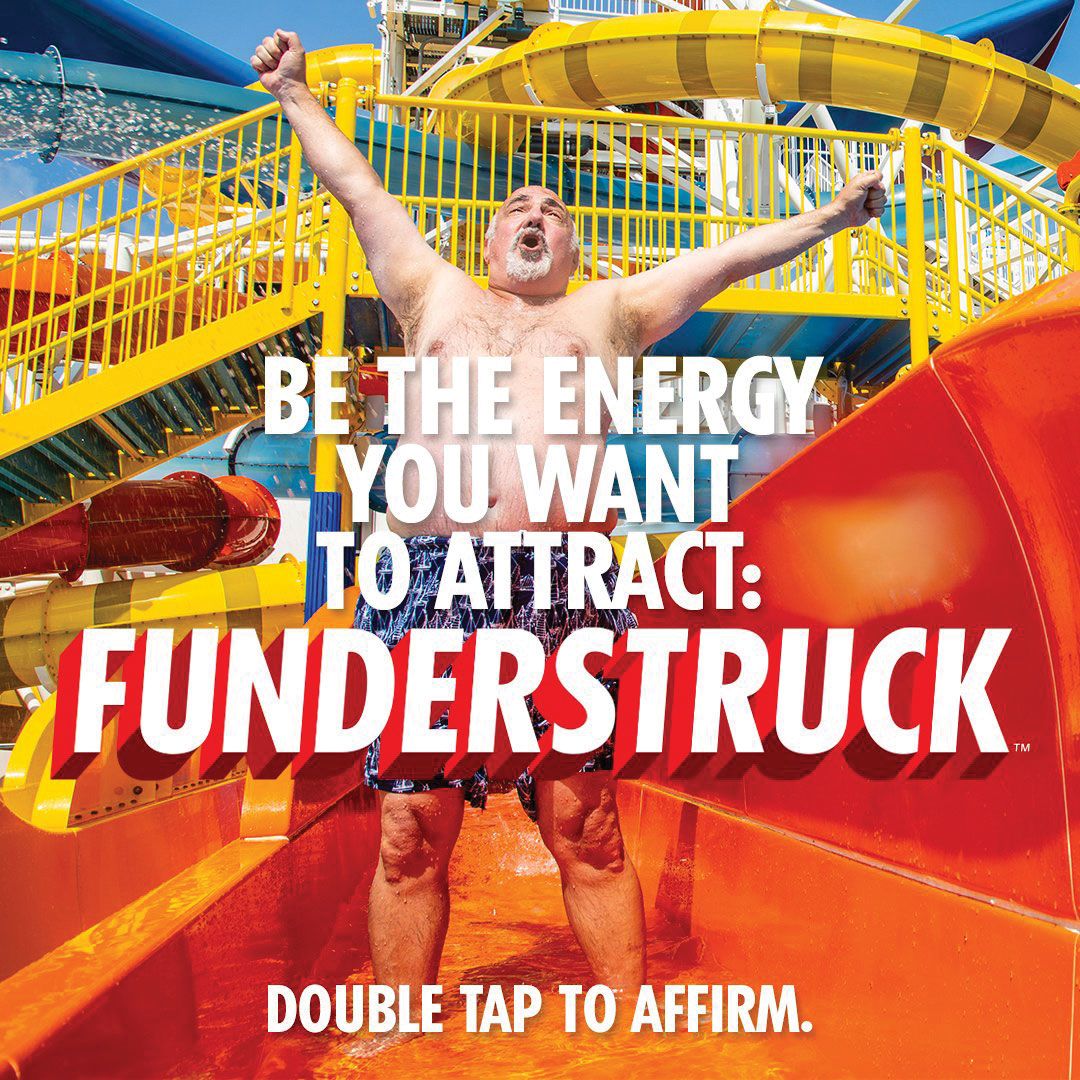
Carnival pulled back from advertising for more than a year but is back strong now with, among other things, a “Funderstruck” campaign launched in December. (Courtesy of Carnival Cruise Line)
Carnival pulled back from advertising for more than a year but is back strong now with, among other things, a “Funderstruck” campaign launched in December. (Courtesy of Carnival Cruise Line)
Throughout the pause, the line stayed in touch with customers via social media, including TikTok and Instagram, and its latest campaign is manifest there, as well. In Snapchat’s selfie mode, a Carnival filter will place the selfie-taker on the pool deck of a ship in front of a large “dive-in” movie screen. As users smile and raise their eyebrows, a Funderstruck meter increases, enabling them to distort their eyes or mouth to show how excited they are as a pink flamingo floaty drifts by.

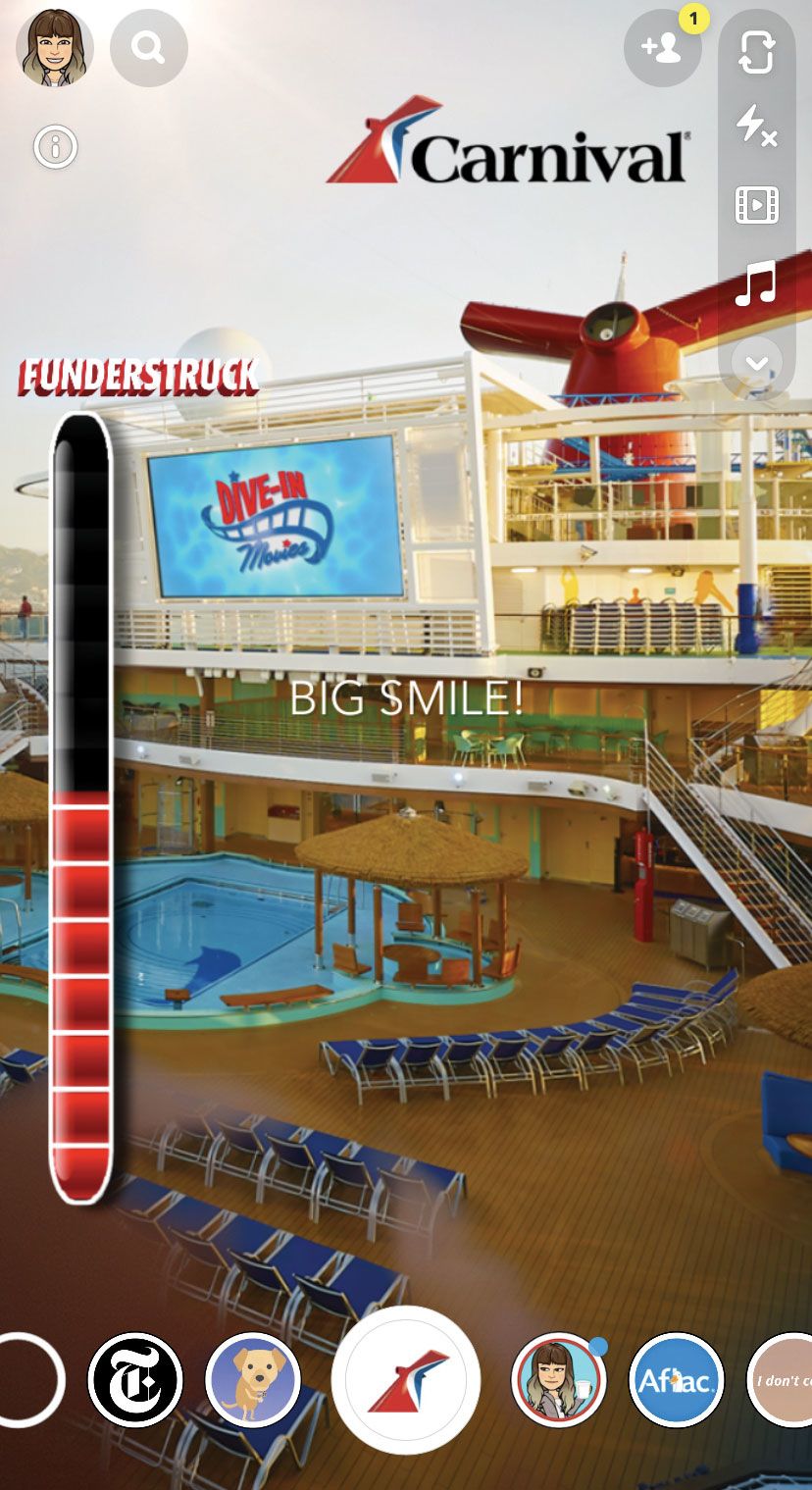
Carnival Cruise Line’s Snapchat filter in mid-March places the viewer on the deck of its ship and urges a big smile to get a higher reading on the “Funderstruck” meter. (Courtesy of Carnival Cruise Line)
Carnival Cruise Line’s Snapchat filter in mid-March places the viewer on the deck of its ship and urges a big smile to get a higher reading on the “Funderstruck” meter. (Courtesy of Carnival Cruise Line)
Such filters are just one way cruise lines have gotten creative with marketing as the pandemic wanes. Disney is also using Tik Tok filters, enabling users who choose a Mickey Mouse filter with a sailor’s cap to become a ship captain at sea — complete with big, round mouse ears — and the words “Disney Cruise Line” and “Where magic meets the sea” at the top of the screen. Mickey, of course, is there with you, smiling.
— Andrea Zelinski


Tours and river cruise
For tour operators and river cruise lines, the ramp-up in marketing efforts comes just as the Ukraine conflict prompts new concerns in Europe, the bread-and-butter destination for many of them.
But the companies are pressing on with marketing, eager to move forward.
“No time in history have conditions presented a bigger challenge to marketing,” said Steve Born, Globus’ chief marketing officer. “While keeping a close eye on the geopolitical situation now, the macro factors continue to build to a strong recovery, and our marketing messages and volume will remain in synch with building demand.”
Globus’ latest advisor support and consumer marketing efforts focus on positive travel inspiration.
“We’ve embraced the theme of ‘Just Say Yes to Travel’ through the first quarter,” said Born. “After nearly two years of hearing ‘no’ when it comes to making new travel plans, it’s finally time to say ‘yes.’ With consumer demand building, the relevant message for travelers is to reconnect them to their passion, help them safely and securely get back to the world and spark demand for our agent partners.”
Luxury operator Tauck said that while the company was able to be flexible and creative in response to Covid-era travel restrictions and entry requirements, it is happy to leave them behind with lessons learned.
“The good news is that the current environment feels like a familiar place for our marketing team, and the experiences of the past two years have helped us evolve in some very beneficial ways,” said Julia O’Brien, Tauck’s director of marketing. “In particular, we’re more nimble and more flexible today, and we know that we need to expect the unexpected. That said, we’re also incredibly optimistic that the tides are turning, and as they do, our team is well prepared to continue to engage with our current, past and future customers.”
The Travel Corp.’s Guy Young, chief trade engagement officer of North America for TTC Tour Brands, a newly created structure within the organization, said its new marketing strategy reflects clear signs of a travel comeback in 2022.

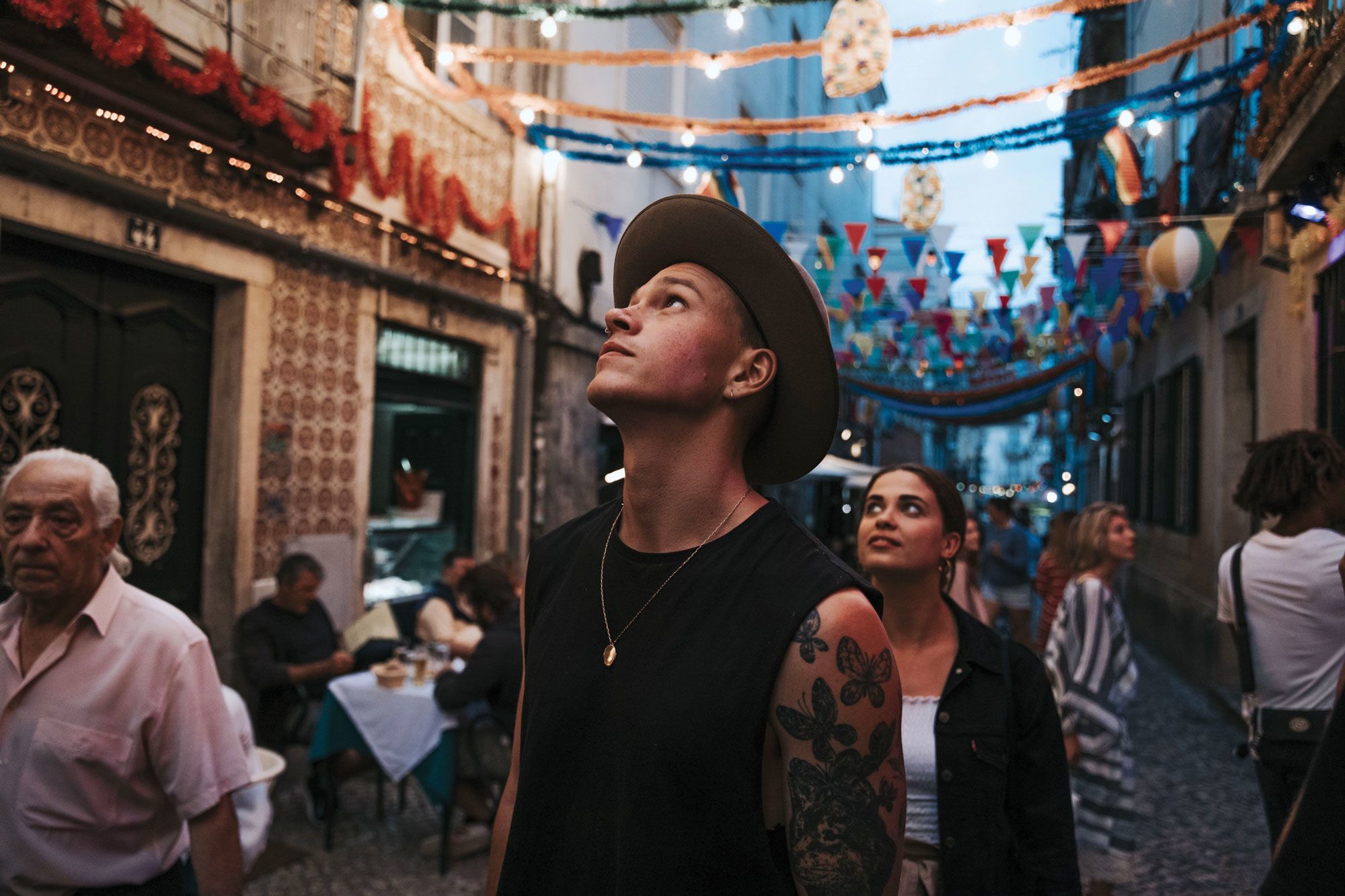
The Travel Corp.’s latest marketing campaigns reflect the anticipation for travel’s return. (Courtesy of The Travel Corporation)
The Travel Corp.’s latest marketing campaigns reflect the anticipation for travel’s return. (Courtesy of The Travel Corporation)
“We are looking at the whole marketing funnel, focusing not simply on conversion — although that is critical — but on creating awareness of tour vacationing, its relevance to the way travelers want to experience the world today and on the individual brands within our portfolio,” Young said.
But despite the easing of global travel restrictions and stringent entry requirements that deterred so many people from taking trips over the last year, the Ukraine situation has impacted travel in and around the region. And with a new surge of omicron in Europe making headlines again, some companies have that familiar feeling of being on the precipice of a promising season only to have a new global event send them back to square one.
“Certainly, there remains a level of cautiousness around travel due to Covid and more recently Ukraine,” said TTC’s Young. “We were picking up steam last year, and then delta hit, basically turning off the faucet. When omicron hit, it was more of a speed bump. If we get through the end of summer and there are better options in terms of antivirals and treatments and confidence in the world not shutting down again, that momentum will carry us through the winter. Right now travel for May and throughout the summer is strong.”
— Nicole Edenedo


Hotels
Marriott International is making sure its marketing strategies and partnerships are not just back but more effective than ever.
Brian Povinelli, Marriott’s senior vice president of brand, loyalty and portfolio marketing, said the company’s marketing arm first noticed online travel searches starting to surge in February.
“Over the last four to five weeks, the search for travel-related terms has grown dramatically, week over week,” he said. “We’re also starting to see more and more people looking farther afield.”
Marriott has responded nimbly to shifting consumer sentiment, using a combination of first- and third-party data to target travelers with timely and relevant offers. In addition to the traditional customized email messaging, the company recently revamped its digital presence, serving up personalized content via both its homepage and Marriott Bonvoy app.
Meanwhile, on the partnership front, it’s a return to form for Marriott. Its tie-ups with high-profile sports and entertainment organizations — including the NCAA, NFL and Coachella — are again in effect after being on pause for much of the pandemic.
“And when it comes to bringing those back, we’re seeing a much larger budget than we had in 2020,” said Mandy Gill, Marriott’s vice president of global marketing for the U.S. and Canada.

Mandy Gill, Marriott
Mandy Gill, Marriott
This year, for example, Marriott extended its longstanding NCAA partnership with a new Marriott Bonvoy commercial spot starring former NBA star and current college basketball TV analyst Grant Hill and will bolster its presence at Coachella with an on-the-ground activation for its W lifestyle brand, a move expected to build influencer and social media buzz.
Marriott Bonvoy’s TV spot includes former NBA star and current TV analyst Grant Hill and a number college mascots. (Courtesy of Marriott)
“We’re being cautious, because our hotels are still in recovery, but the biggest takeaway is that we’ve been able to make our media more efficient,” said Gill. “We’ve been able to make our media essentially work harder and, what’s more, make each dollar go further.”
— Christina Jelski


Travel agencies
Live events have been a popular go-to for travel marketing across the board, including the largest agencies in the country, Expedia Group and Booking.com, whose ads debuted during this year’s Super Bowl.
Idris Elba stars in Booking.com’s Super Bowl commercial, which kick-started the OTA’s push to introduce more U.S. consumers to the brand. (Courtesy of Booking.com)
Expedia’s features actor Ewan McGregor contemplating, “Do you think any of us will look back on our lives and regret the things we didn’t buy? Or the places we didn’t go?” Booking.com’s had Idris Elba take some shots at the OTA’s name: “But, it’s who we are,” he says. “We’re good at helping you book travel. Like, amazingly good. And kinda bleep at naming.”
Expedia’s marketing spend has been increasing in recent months, including a Super Bowl ad starring Ewan McGregor. (Courtesy of Expedia)
Expedia CFO Eric Hart said on the company’s February earnings call that marketing spend was up in the fourth quarter over the year prior “in response to improved travel demand.” Marketing spend was about $875 million, still 12% less than it was in the same quarter in 2019 but up from the 19% drop in the fourth quarter of 2020. Higher marketing spend was also expected in the first quarter, Hart said, “ahead of summer travel.”
Booking Holdings’ CEO Glenn Fogel said that in the fourth quarter of 2021, marketing spend was $974 million, up from $386 million in the same period of 2020. Brand marketing fell off during the “worst of the pandemic,” he said, but “we are stepping back into a more normal marketing approach as we did in 2019.”
More is coming, too, he said.
Booking.com had “great year” in the U.S. in 2021, he said, and is looking to accelerate that momentum with brand marketing that extends beyond the Super Bowl ad “to introduce Booking.com to an even broader audience.”
Brent Rivard, Internova Travel Group’s chief marketing officer, said that very few suppliers and destinations went “completely dark” during the pandemic, which is also true of Internova’s brand marketing.

Brent Rivard, Internova Travel Group
Brent Rivard, Internova Travel Group
“We remained active in our messaging to customers and used our own consumer sentiment research to guide what our message and content should be,” he said.

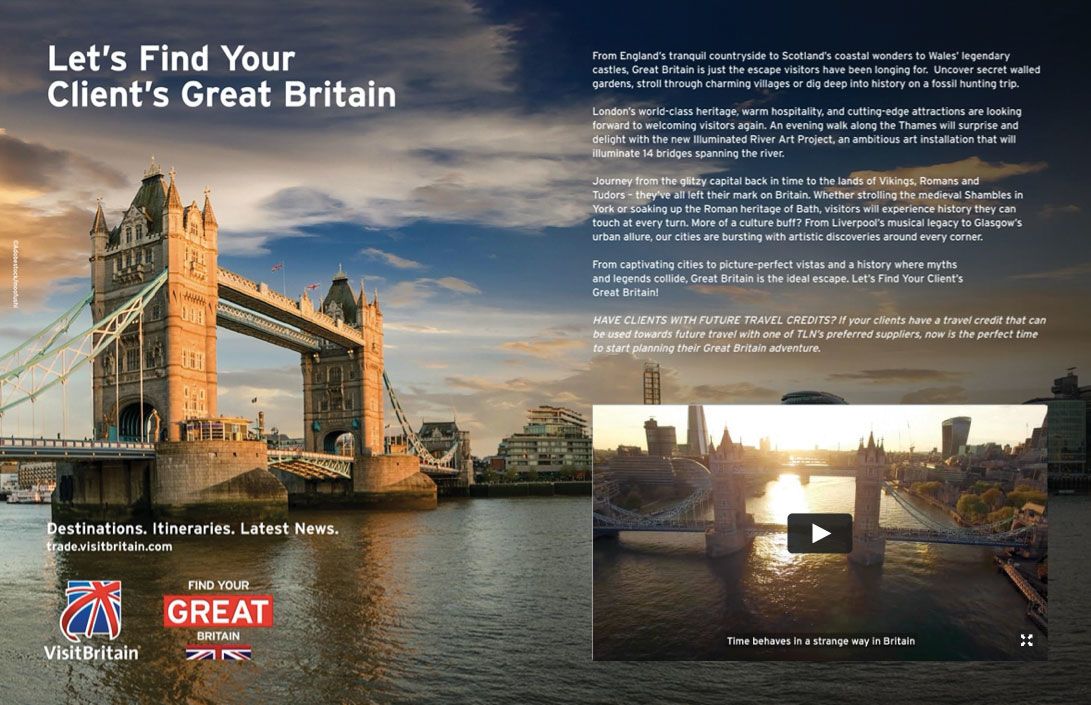
Internova said marketing campaigns from supplier and destination partners — like this one, a B2B ad from Visit Great Britain — remained active during the pandemic. (Courtesy of Internova Travel Group)
Internova said marketing campaigns from supplier and destination partners — like this one, a B2B ad from Visit Great Britain — remained active during the pandemic. (Courtesy of Internova Travel Group)
Those messages changed with the pandemic, including a “Dream Now, Travel Later” campaign that provided inspirational content such as virtual tours; a “Why We Vacation” campaign aimed at providing “emotional connections to all the reasons why we miss traveling”; a “Travel With Confidence” campaign, providing updates on travel protocols in destinations that were open; and the “Let’s Go” campaign, actively promoting travel in recognition that people are ready and eager to travel again.
“We’ve seen the same from supplier and destination partners. Their campaigns have remained active throughout the pandemic, but the message they delivered changed with the opportunity,” Rivard said.
Virtuoso’s Helen McCabe-Young said that in the first quarter of 2022, e-marketing placed through Virtuoso is up 60% over the same time in 2021, while ad pages for its May issue of Virtuoso Life magazine are up 20% over the January issue.

Helen McCabe-Young, Virtuoso
Helen McCabe-Young, Virtuoso
She said that brands are “dialing in to meet consumers where they are today, ready to travel with some evolved priorities.” And among Virtuoso’s luxury traveler set, that means recognizing that “travelers are ready to spend and there is a much greater drive toward spending time well — if you’re going, go big,” she said.
“The most compelling messages are emotive; a reminder of what we’ve all been missing and what we all want to get back to doing. In some ways, ads are almost giving people permission to travel again, to go from inspiration to action and to travel well by keying in to the ‘why wait?’ or ‘this is my bucket list moment’ sense of urgency.”
McCabe-Young said the current situation provides tremendous opportunity for the trade.
“Travelers, more than ever before, value the privilege of travel, value the expertise of travel advisors and are also dialed in to the impact of their choices,” she said, adding that people increasingly “vote with their wallet” and choose, for example, companies with clear sustainability practices.
“And people are focused on making sure their time spent is as rewarding as possible. We expect to see an increasing number of campaigns roll out that feel emotive and authentic. The industry took a two-year hiatus, and now it’s making up for lost time.”
— Jamie Biesiada
 Built with Shorthand